Boost Your Mental Focus While Quitting with Quitcubes
It's commonly said that quitting nicotine is a test of willpower, but for many, the biggest challenge isn't simply the need but also the "brain fog." Even the most basic activities can seem unachievable due to the persistent inability to concentrate that sets in only hours after your last smoke. This cognitive friction is a key reason many people return to smoking or vaping, as it can feel like nicotine is needed just to “think straight” again.
Enhancing your mental clarity is vital during this transition. Quitcubes provides a unique tool to help you maintain your focus as you navigate this shift. Designed as a better alternative to vaping and smoking, these non-nicotine, fruit-based gummies address the behavioral and sensory gaps left behind when you quit, allowing you to try to help manage the stress of withdrawal while working toward your long-term goals.
The Neurochemistry of Focus: Why Withdrawal Clouds the Mind
To effectively boost your focus while quitting, it helps to understand why it disappears in the first place. Nicotine is a powerful pharmacological agent that hijacks the brain's natural focus mechanisms.
The Acetylcholine Mimic
Nicotine mimics acetylcholine, a neurotransmitter essential for memory, attention, and alertness. When you smoke or vape, nicotine binds to nicotinic acetylcholine receptors (nAChRs) in the brain, triggering an artificial release of dopamine and other excitatory chemicals. This creates a temporary feeling of "sharpness."
However, the brain is highly adaptive. When it is constantly flooded with nicotine, it reduces its own production of focus-related chemicals and desensitizes its receptors. According to a study published in PMC (PubMed ID 3779499), nicotine withdrawal is directly associated with deficits in neurocognitive function, including sustained attention and working memory. When the nicotine is removed, the brain's "focus signal" becomes weak and scattered, leading to the dreaded brain fog.
The Withdrawal Peak
Research indicates that these cognitive losses typically peak within the first 72 hours after quitting. Increased irritability and a greater risk of relapse may arise from the difficulty in focusing during this time. During this time, you can address the physical "hand-to-mouth" habit by using Quitcubes, a better substitute for vaping and smoking that may help ease the psychological discomfort.
Quitcubes: A Better Alternative to Vaping and Smoking
Quitcubes takes a fresh approach to quitting. Unlike traditional methods that focus solely on the chemical aspect, Quitcubes addresses the habitual triggers, routines, and sensory cues that signal to your brain it’s time for a "hit."
Satisfying Oral Fixation
One of the most difficult parts of quitting is the sudden absence of the oral ritual. Whether it’s the tactile feel of a vape or the ritual of lighting a cigarette, the mouth is a primary focus of the addiction loop. Oral fixation is often a response to stress; when the mouth is occupied, the nervous system receives a "soothing" signal.
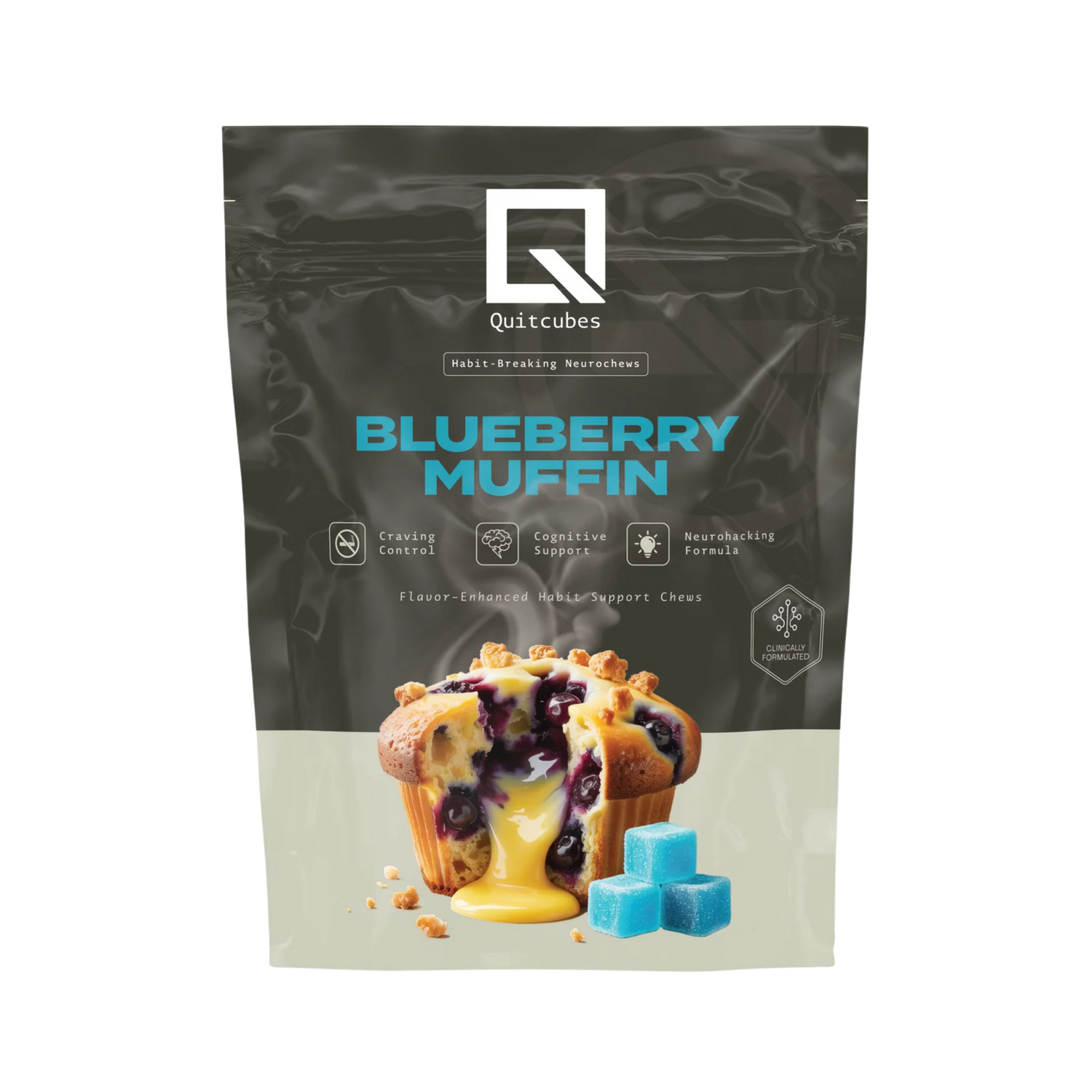
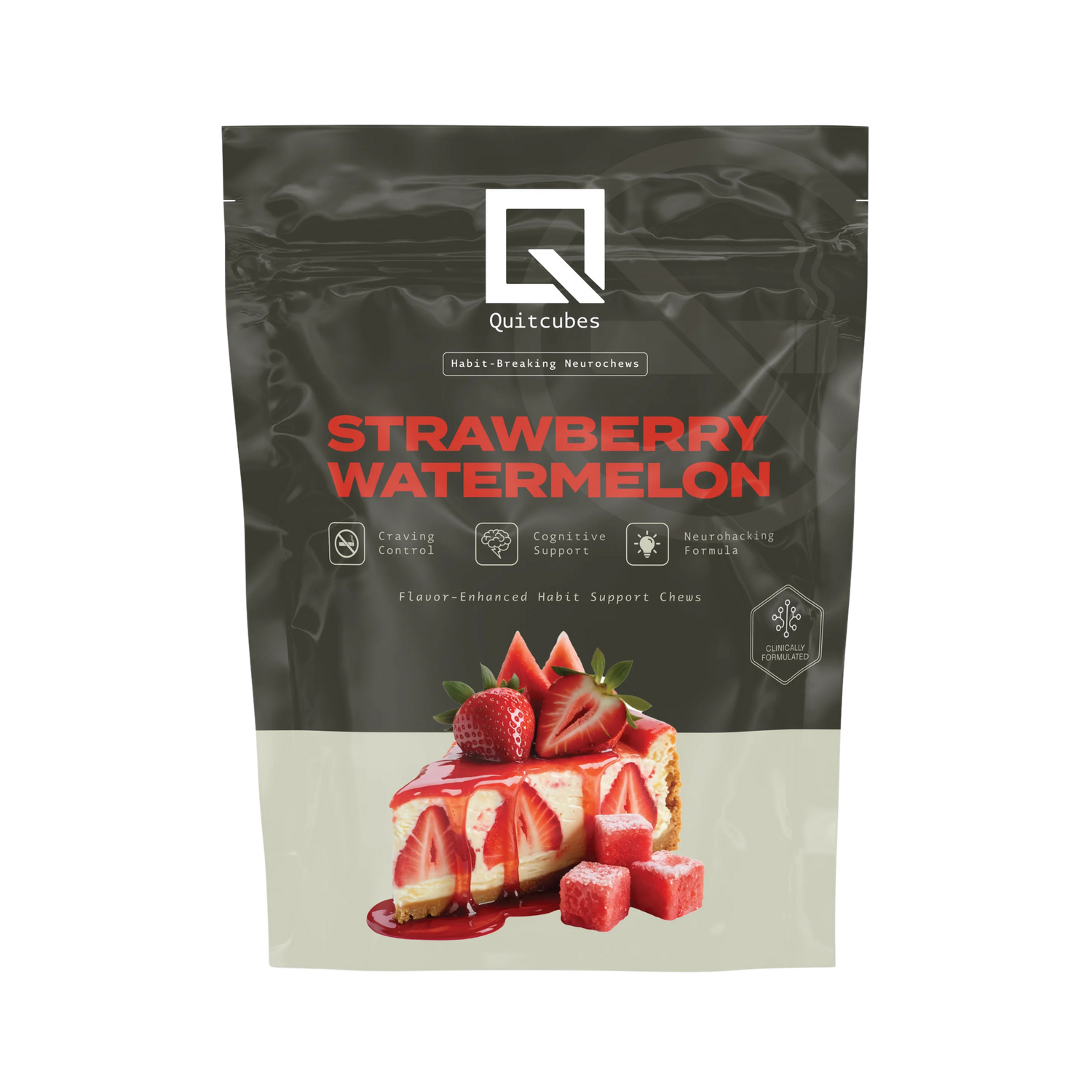
Each chewable Quitcube is crafted to satisfy this fixation. By providing a tactile, flavorful experience, they help you rewire your habits. Instead of reaching for a device, you can reach for a Blueberry Muffin or Strawberry Watermelon gummy, giving your brain a new, nicotine-free reward.
The Role of Functional Ingredients
Quitcubes are made with a clean-label formula of functional ingredients. These ingredients are selected to help manage and reduce stress naturally. By providing a sensory "circuit breaker" for cravings, Quitcubes may help you navigate high-pressure moments without returning to old habits.
Important Note: While Quitcubes are a non-nicotine product, they do contain Arecoline. Arecoline is a natural alkaloid that acts as a partial agonist of nicotinic receptors, similar to how nicotine functions. Because of this, it is important to understand that Arecoline is an addictive substance. Quitcubes are designed to be a bridge, a better alternative to vaping and smoking, but they are not a "health" supplement or a general wellness product. They are a functional tool for a specific journey.
Practical Tips to Boost Mental Focus During the Quitting Process
In addition to using Quitcubes as a behavioral substitute, incorporating specific lifestyle strategies can help clear the fog and improve your mental clarity.
1. Stay Physically Active
One of the best methods to revive a sluggish brain is to engage in physical activity. The prefrontal cortex, the part of the brain in charge of executive function and focus, receives more blood when you exercise. Natural endorphins and "brain-derived neurotrophic factor" (BDNF), which promote cognitive function, can be released by even a quick 10-minute walk when a craving strikes.
2. Practice Mindfulness and Deep Breathing
When focus slips, anxiety usually follows. Mindfulness techniques help you stay present in the moment rather than spiraling into thoughts about your next craving.
The 4-7-8 Technique: Inhale for 4 seconds, hold for 7, and exhale slowly for 8. This practice can effectively reduce anxiety and improve concentration by regulating your autonomic nervous system.
The Sensory Anchor: While enjoying a Strawberry Watermelon Quitcube, focus entirely on the texture and the natural fruit flavor. This grounded sensory experience can act as a "reset button" for your focus.
3. Structured Progress
You can maintain motivation without feeling overburdened by breaking your journey into small, achievable goals. Instead of thinking about "forever," concentrate on making it through the next hour. It is easier to focus on the current work because of this structure's reduction of cognitive burden.
Join the Quitcubes Movement in Los Angeles
If you live in Los Angeles, Quitcubes offers a helpful setting for anyone looking to give up. The foundation of our movement is the notion that you don't have to face the difficulties of quitting alone. You'll find it simpler to maintain your commitment to your objectives with our resources and the ability of our functional gummies to increase attention.
The transition is more pleasurable thanks to our delectable varieties:
- Blueberry Muffin: A naturally delicious, cozy treat that transforms a difficult situation into a fun habit.
- Strawberry Watermelon: A vibrant, revitalizing fruit that simultaneously fulfills your mouth fixation and sweet tooth.
The Long-Term Mental Payoff: Clarity Beyond Nicotine
The most encouraging part of this journey is that the brain fog is temporary, but the mental benefits of quitting are permanent. While nicotine provides a "fake" focus, a nicotine-free life offers genuine mental stability.
Improved Baseline Mood
According to the NHS, research has found that stopping nicotine can be as effective as some antidepressants for improving long-term mood and reducing anxiety. Once your brain's acetylcholine receptors return to their natural state, you will likely find that your "natural" focus is sharper and more consistent than your "nicotine" focus ever was.
Reclaiming Control
One of the greatest boosts to mental focus is the feeling of self-efficacy. Nearly half of the people who quit vaping report feeling more "in control" of their lives. This sense of agency clears the mental clutter of addiction, allowing you to dedicate your cognitive energy to your career, your hobbies, and your relationships.
Take the First Step
Long-term success depends on improving your mental focus when quitting, and Quitcubes is committed to helping you along the way. We provide the support you need to overcome the challenges of withdrawal by emphasizing stress management, maintaining consistent routines, and offering a tasty, clean-label alternative.
Recall that you are beginning a new, more concentrated phase of your life rather than merely "stopping" a habit. You are investing in your future clarity each time you decide to give up smoking and vaping.
Are you prepared to become more focused? Find a better option for your everyday routine by ordering your Quitcubes online right now.
References & Sources
PMC (PubMed ID 3779499): "Cognitive Function During Nicotine Withdrawal: Implications for Nicotine Dependence Treatment." This study highlights how withdrawal leads to deficits in attention and working memory. View Source
ACS Chemical Neuroscience: "Arecoline: DARK Classics in Chemical Neuroscience." An in-depth review of the addictive properties and neuroactive effects of Arecoline. View Source
ScienceDaily: "Researcher finds key clues about betel nut addiction." Explains the commonality between Arecoline and nicotine in the brain's addiction receptors. View Source
NHS (UK): "Stopping smoking for your mental health." Details the long-term mood and focus benefits of quitting tobacco and nicotine. View Source
Truth Initiative: "A breath of fresh air: The immediate benefits of quitting smoking or vaping nicotine." View Source
Journal of Behavioral Medicine: Research regarding the role of oral fixation and sensory substitutes in habit modification.
Try Quitcubes Today
Quitcubes offer a better alternative to smoking and vaping. Break free from nicotine with a plant-powered alternative designed to try to help make the transition away from smoking or vaping easier.