The Importance of Mental Health in the Journey to Quit Smoking
One of the most important health choices a person can make is to stop smoking, as it affects almost every biological system in the body. But the discussion typically ignores the most important aspect of the journey, the mind, in favor of concentrating on the heart and lungs. We at Quitcubes in Los Angeles understand that quitting smoking requires treating the underlying psychological aspects of addiction. This article explores how Quitcubes can support you as you embark on this transformative path and understand how important mental health is to quitting.
Instead of being merely a biological addiction, nicotine is used by many as a psychological "crutch" to help them cope with the difficulties of daily living. Giving up that crutch might have crippling psychological effects. Understanding the neuroscience behind this change is the first step in regaining your mental stability. Quitcubes, a fruit-based, non-nicotine candy that targets the behavioral patterns that keep the mind attached to the habit, were created as a superior substitute for vaping and smoking.
Understanding the Connection Between Mental Health and Smoking
Smoking often extends far beyond a simple physical need for nicotine. For many, it acts as a primary coping mechanism for managing stress, anxiety, and even symptoms of depression. This creates a complicated relationship where the act of smoking becomes synonymous with emotional regulation.
The Stress Paradox
There is a common misconception that smoking or vaping lowers stress. In reality, nicotine is a stimulant that increases heart rate and blood pressure. The "relaxation" a smoker feels when they light up is actually a reduction in withdrawal symptoms. The body experiences slight physical tension and irritation as blood nicotine levels decline. The brain views lighting a cigarette as a relaxing chemical because it reduces that particular tension.
This loop produces a "stress paradox" in which the habit is the main cause of the worry it seems to alleviate. According to research published by the National Library of Medicine (PubMed ID 7722172), nicotine acts as a potent modulator of the brain's chemistry, forcing it into a state of artificial arousal. By choosing a better alternative to vaping and smoking, you allow your nervous system to begin the process of returning to a natural, stable baseline.
Identifying Emotional Triggers in the Los Angeles Lifestyle
Living in a vibrant city like Los Angeles comes with its own set of emotional triggers. These situations frequently give rise to the impulse to smoke or vape, whether it be the stress of a fast-paced career, social anxiety at an industry event, or just plain annoyance of sitting in traffic on the 405.
Common Emotional Triggers
- Workplace Stress: High-pressure environments often lead to "smoke breaks" as a way to step away and reset.
- Social Situations: Holding a cigarette or vape gives many people a sense of confidence in social situations and satisfies their demand for manual and oral activity.
- Loneliness or Boredom: The ritual of smoking often fills gaps in the day, providing a sense of "doing something" during moments of stillness.
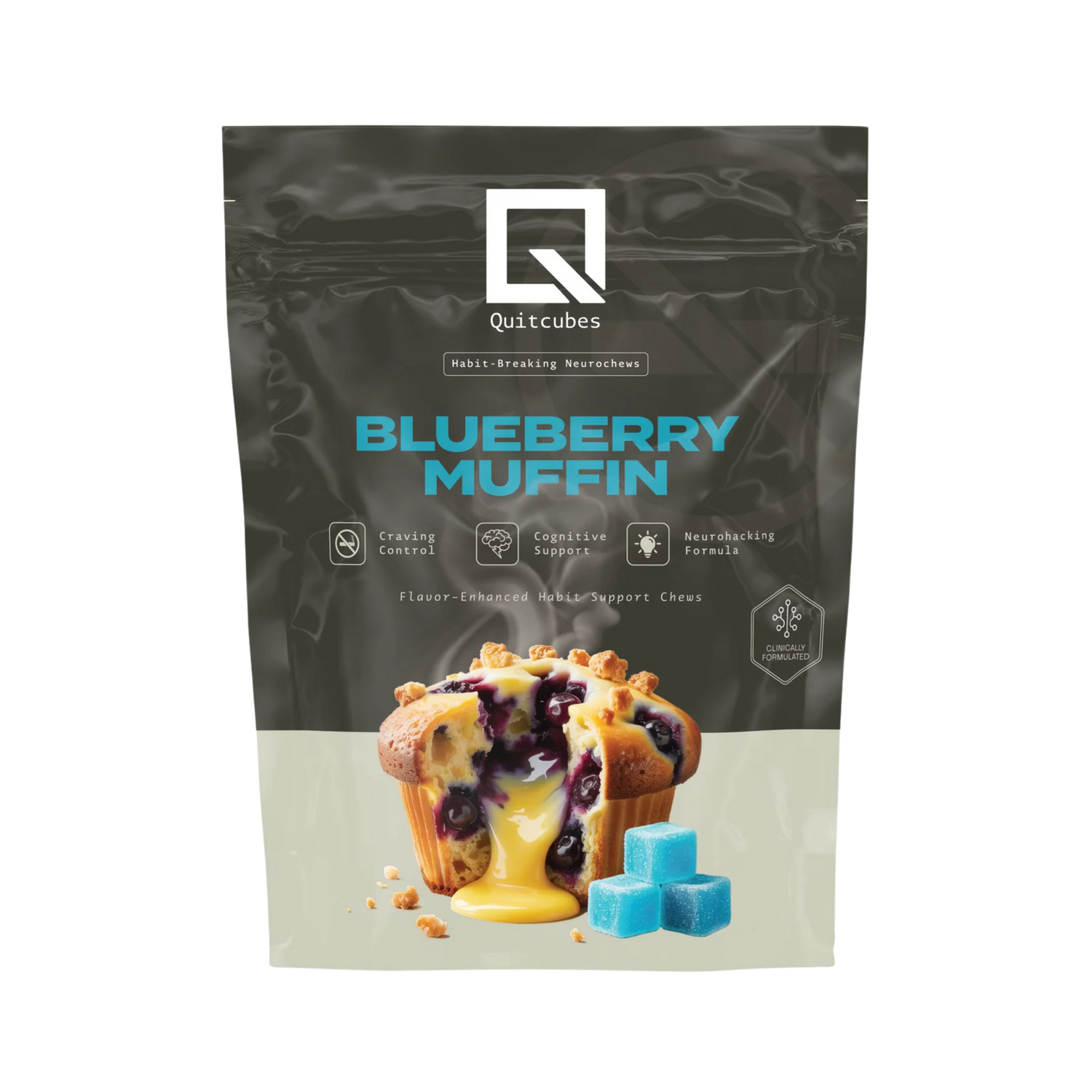
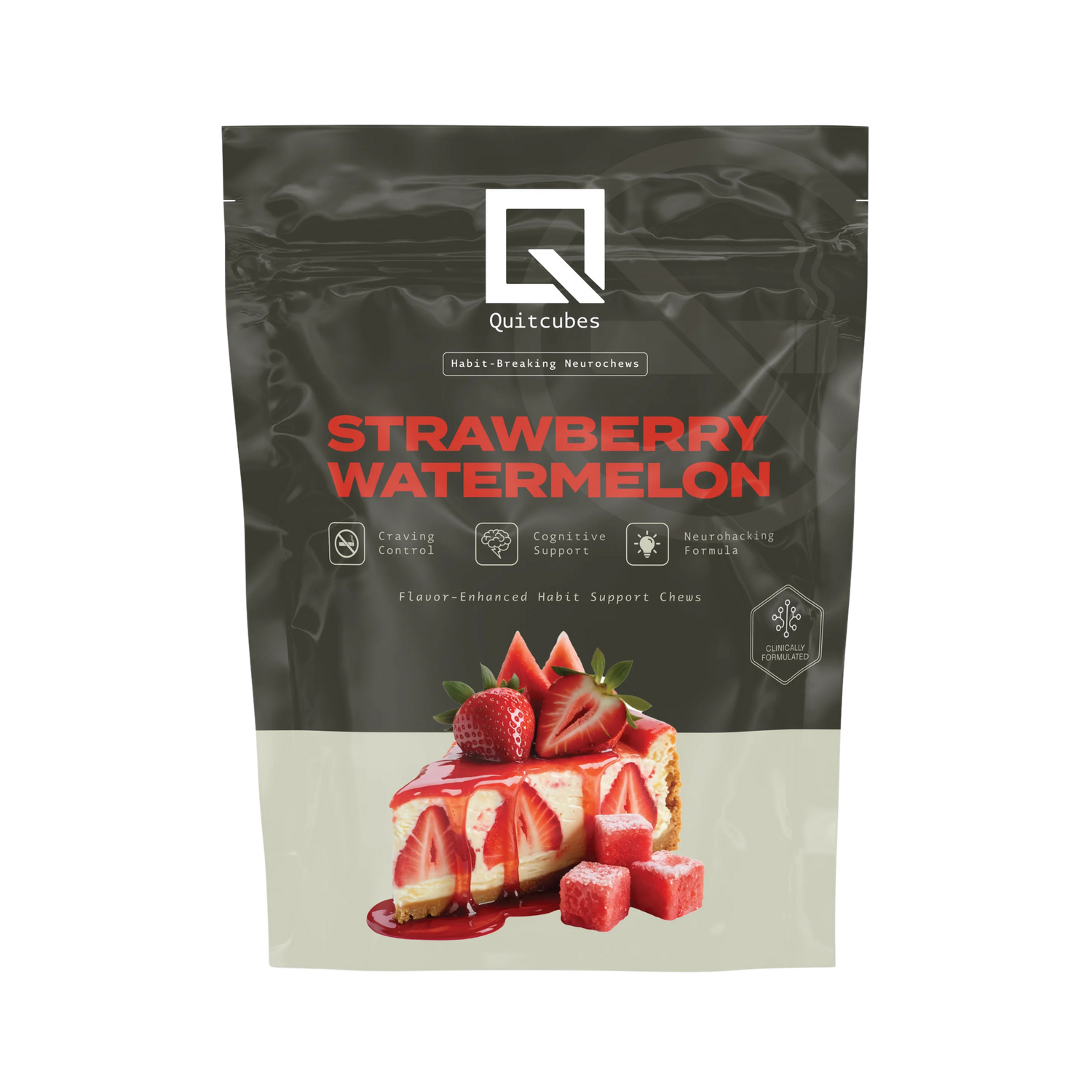
Developing effective coping mechanisms requires understanding these triggers. For these situations, Quitcubes offer a useful tool. You could reach for a strawberry watermelon gummy or a blueberry muffin instead of a nicotine gadget. By doing this, you can respect your need for a physical "break" without reintroducing nicotine.
The Neurobiology of the "Quit": Dopamine and Mental Clarity
The cognitive impact of quitting can be better understood by looking into the brain's reward system. Dopamine, a neurotransmitter linked to motivation and pleasure, is significantly increased by nicotine. The more nicotine we use, the more reliant we become on it to sustain normal dopamine levels because our brains will have become desensitized to natural rewards.
Dopamine levels would therefore likely drop significantly when a person stops smoking nicotine, which could result in symptoms like "brain fog," increased irritability, and depression. This occurrence results from a transient chemical imbalance that occurs when the brain tries to increase the synthesis of its own neurotransmitters. Although this is a difficult process to endure, the long-term benefits to mental health are remarkable. Studies show that once the brain has stabilized from the cessation of using nicotine, many individuals have lower baseline anxiety levels and experience greater emotional stability than they did when they were active smokers.
How Quitcubes Support Your Mental Balance
At Quitcubes in Los Angeles, we focus on the behavioral and sensory gaps that make quitting so difficult. We provide a better alternative to vaping and smoking that respects the psychological need for a ritual.
Satisfying Oral Fixation
Oral fixation is a significant component of nicotine addiction. The act of having something in your mouth is often a self-soothing behavior. Quitcubes are chewable, fruit-flavored gummies specifically crafted to satisfy this fixation. By providing a tactile and flavorful experience, they help "quiet" the part of the brain that is screaming for a familiar ritual.
Managing the "Quit Stress"
The first few weeks of quitting are often marked by a spike in cortisol, the body's primary stress hormone. Quitcubes are made with a clean-label formula of functional ingredients that try to help manage and reduce stress. By providing a pleasant sensory distraction through flavors like Strawberry Watermelon, they act as a "circuit breaker" for the intensity of a craving.
A Note on Arecoline
Transparency is essential when discussing any behavioral aid. Quitcubes contain Arecoline, a natural alkaloid found in betel nuts. Arecoline acts as a partial agonist at nicotinic receptors, providing a familiar grounding sensation during a high-stress craving.
It is important to understand that Arecoline is an addictive substance. We do not make claims that Quitcubes are non-addictive or that they are a healthy wellness product. We also do not claim they are more effective or "healthier" than clinical nicotine replacement therapies like the patch or gum. Instead, we present them as a realistic behavioral bridge, a better alternative to vaping and smoking for those who want to stop inhaling toxins and move toward a nicotine-free life.
Psychological Benefits of a Nicotine-Free Life
Quitting is a challenging journey, but the psychological benefits are life-changing. Your mental health can improve in a number of important areas if the cycle of nicotine surges and falls is broken:
- Reduced Baseline Anxiety: After the initial transition period, many persons report a significant decrease in their overall anxiety levels due to the absence of the ongoing cycle of withdrawal-induced stress.
- Improved Mood and Stability: You'll have more steady energy and mood levels throughout the day if you can regain control over your brain's natural reward system.
- Increased Self-Esteem: REM sleep can be disrupted by nicotine, a stimulant. Your sleep may become more restorative as your system clears, further strengthening your emotional fortitude.
- Better Sleep Quality: Nicotine is a stimulant that can interfere with REM sleep. As your system clears, you may find that your sleep becomes more restorative, further supporting your emotional resilience.
Practical Strategies for Emotional Resilience
In addition to using Quitcubes, incorporating mindfulness and behavioral techniques can help you stay committed to your smoke-free future.
Practice Mindful Consumption
When you feel a craving, instead of rushing to satisfy it, take a Blueberry Muffin cube and focus entirely on the taste and texture. Notice the natural sweetness and the chewiness. This practice of "grounding" can help pull your mind out of an anxious spiral and back into the present moment.
Deep Breathing Exercises
When stress hits, your breathing often becomes shallow. Use the "Box Breathing" technique: inhale for 4 seconds, hold for 4, exhale for 4, and hold for 4. This physically signals to your nervous system that you are safe, helping naturally lower the "fight or flight " stress.
Build a Supportive Community
Living in Los Angeles provides access to a wide range of wellness resources and support groups. Connect with others who are on the same journey. Sharing your experiences and hearing from others can reduce the feeling of isolation that often accompanies quitting.
Why the Clean-Label Choice Matters
In a city as health-conscious as Los Angeles, what you put into your body matters. Many support tools contain artificial sweeteners, synthetic dyes, and chemical fillers. Quitcubes take a different approach.
- Naturally Flavored: Our flavors like Blueberry Muffin and Strawberry Watermelon are derived from natural sources.
- No Artificial Dyes or Sweeteners: We believe in a clean-label formula that respects your body's recovery process.
- 0mg Nicotine: We help you step away from the chemical that started the cycle, focusing on behavioral rewiring instead.
By choosing a clean-label product, you ensure your "new" habit is as clean as possible, supporting your goal of a smoke-free lifestyle.
Embrace Your Mental Balance
It is certainly difficult to stop smoking, but you can overcome barriers if you recognize the significance of mental health throughout the process. You are recovering your thoughts, your vitality, and your emotional stability rather than merely "stopping" a habit.
We at Quitcubes in Los Angeles are committed to providing you with the behavioral support you need to regain your equilibrium. We provide a better, more convenient alternative to vaping and smoking by treating oral fixation and offering a tasty, practical replacement.
Every time you reach for a Quitcube instead of a vape, you are making a choice for your future self. You are choosing a life defined by your own decisions, not by a chemical urge. Take that first step towards a smoke-free future today and discover a better alternative for your daily routine.
Are you prepared to begin your journey away from nicotine and support your mental health? Get your Quitcubes online right now to help Los Angeles adopt a cleaner lifestyle.
References & Sources
National Library of Medicine (PubMed ID 7722172): "Pharmacological and behavioral effects of nicotine on the human brain and its role in stress modulation." This study explores how nicotine artificially alters chemical responses in the body. View Source
ACS Chemical Neuroscience: "Arecoline: DARK Classics in Chemical Neuroscience." A comprehensive look at arecoline's receptor binding and its addictive properties as a partial agonist. View Source
British Journal of Psychiatry: "Change in mental health after smoking cessation: systematic review and meta-analysis." This research highlights the significant reduction in anxiety and depression symptoms following successful quitting. View Source
World Health Organization (WHO): Reports on the effectiveness of behavioral substitutes and oral fixation management in long-term habit modification.
American Psychological Association (APA): Documentation on the "stress paradox" and the role of dopamine in nicotine withdrawal and mental clarity.
Truth Initiative: "How quitting smoking or vaping improves mental health." View Source
Try Quitcubes Today
Quitcubes offer a better alternative to smoking and vaping. Break free from nicotine with a plant-powered alternative designed to try to help make the transition away from smoking or vaping easier.