Stress Management with Non-Nicotine Gummies: Navigating the Transition
When you leave nicotine behind, you are taking a very important step towards regaining your ability to be yourself throughout the day. But quitting is usually the hard way to accomplish this goal because most people experience a lot of stress and anxiety after they have had their last cigarette or vape. The reason why so many people have trouble quitting goes beyond the physical need for nicotine; it is because when you take away the physical supply of nicotine, you also lose the way you used to cope with the stress of your life. People often feel as though when they quit smoking or vaping, they have completely lost all of the ways they used to deal with stress in their lives.
Quitting nicotine is a huge emotional change, and can create a wide variety of emotions such as mood swings, irritability, and an increased level of tension. When people are smoking or using nicotine, nicotine has been a way of "hacking" the brain's natural response to stressful situations for so long that other methods of dealing with the stress you encounter every day are not available to you. To prevent these negative feelings from interfering with your ability to quit, you will need to develop a plan that directly addresses emotional issues. Quitcubes are non-nicotine, fruit-based gummies designed to be a better alternative to vaping and smoking. A clean-label process from the product will help give people relief from withdrawal while quitting by providing a sensory outlet to address both the psychological issues (e.g., withdrawal) and the physical aspects of the habit.
The Connection Between Cravings, Mood Swings, and Stress
When you're using nicotine, your brain associates nicotine with relief, establishing a powerful cycle of behavior. The cycle begins when something stressful happens, which cues you to smoke or use your electronic cigarette (vaping). This results in the reward of some calmness, but really, that calmness only lasts as long as nicotine remains elevated in your system.
After nicotine has been jettisoned from your system, the process of trying to quit starts the moment the nicotine levels drop, and there's a period of mild withdrawal. The withdrawal symptoms take on the form of irritability and anxiety, and every time you take another "hit," you're not really taking away any stress from that day - just relieving some of the stress from needing additional nicotine to feel better. These swings create a rollercoaster effect. You could feel okay at one moment, and later, during the course of a very minor or simple inconvenience, something that would have otherwise never made you feel uncomfortable could be overwhelming.
Once you reach this point where the release mechanism of nicotine no longer provides the much-needed mental reset, it can be very difficult to stay grounded during this period of quitting. Therefore, the most important thing about quitting nicotine for long-term success is developing ways to deal with these mood swings so you won't need to return to using nicotine.
The Science of the "Stress Paradox": Why Nicotine Actually Increases Stress
It is one of the great ironies of nicotine use: most people use it to relax, yet the chemical itself is a potent stimulant that increases physiological stress. Understanding the science behind this "stress paradox" can help you stay motivated as you move toward a better alternative to vaping and smoking.
The Adrenaline Response
As nicotine is taken into our bodies, it initiates the discharge of sugar (glucose) from our liver and adrenaline (also known as epinephrine) from our adrenal glands located above each type of kidney. These two chemicals activate your body's response called "fight/flight" or "stress response" to provide energy when perceived danger threatens. According to research published in PubMed (PubMed ID 7722172), nicotine has been found to regulate the body's heightened arousal. Many people may feel "relaxed" or "focused" when nicotine affects their body, but are experiencing significant increases in both heart rate and blood pressure, as well as exhibiting greater levels of physical stress than if they had not ingested this drug.
Cortisol and the HPA Axis
Nicotine stimulates the HPA Axis, which is the body's main stress response mechanism. Long-term nicotine usage causes high amounts of cortisol to exist in the person's system. Cortisol is the most prominent stress hormone in the human body. Elevated amounts of cortisol are associated with increased levels of anxiety, sleep issues, and weakened immunity. Studies show that the feeling of "relaxation" experienced by smokers is simply a result of nicotine use countering the negative effects associated with nicotine withdrawal. In this way, nicotine creates stress that it then helps to alleviate.
How Quitcubes Support Your Journey
We designed Quitcubes to address the reality of this stress. By moving to a nicotine-free, fruit-based gummy, you are allowing your HPA axis and adrenaline levels to return to a natural baseline. However, we know that you still need something to help you through the "triggers" of the day.
Satisfying Oral Fixation
People who smoke and vape often refer to smoking or vaping as a stim. Stimming allows the body to cope with stress through repetitive actions. When someone quits, they may feel anxious because their hands and mouths are now empty, which creates a sense of anxiety. The Quitcubes chewable addresses this oral fixation associated with quitting. Chewing these gummies provides a way to relieve stress through the physical act of chewing, thus providing an alternative method of managing your cravings by retraining your brain's neurological pathways to function without the presence of nicotine.
Functional Ingredients and Stress Management
Quitcubes are not just candy; they are made with a clean-label formula of functional ingredients. These ingredients are included to try to help manage and reduce stress during high-pressure moments. Instead of reaching for a vape when you’re stuck in traffic or facing a deadline, you can reach for a gummy that works with your body’s natural chemistry.
Sensory Distraction through Flavor
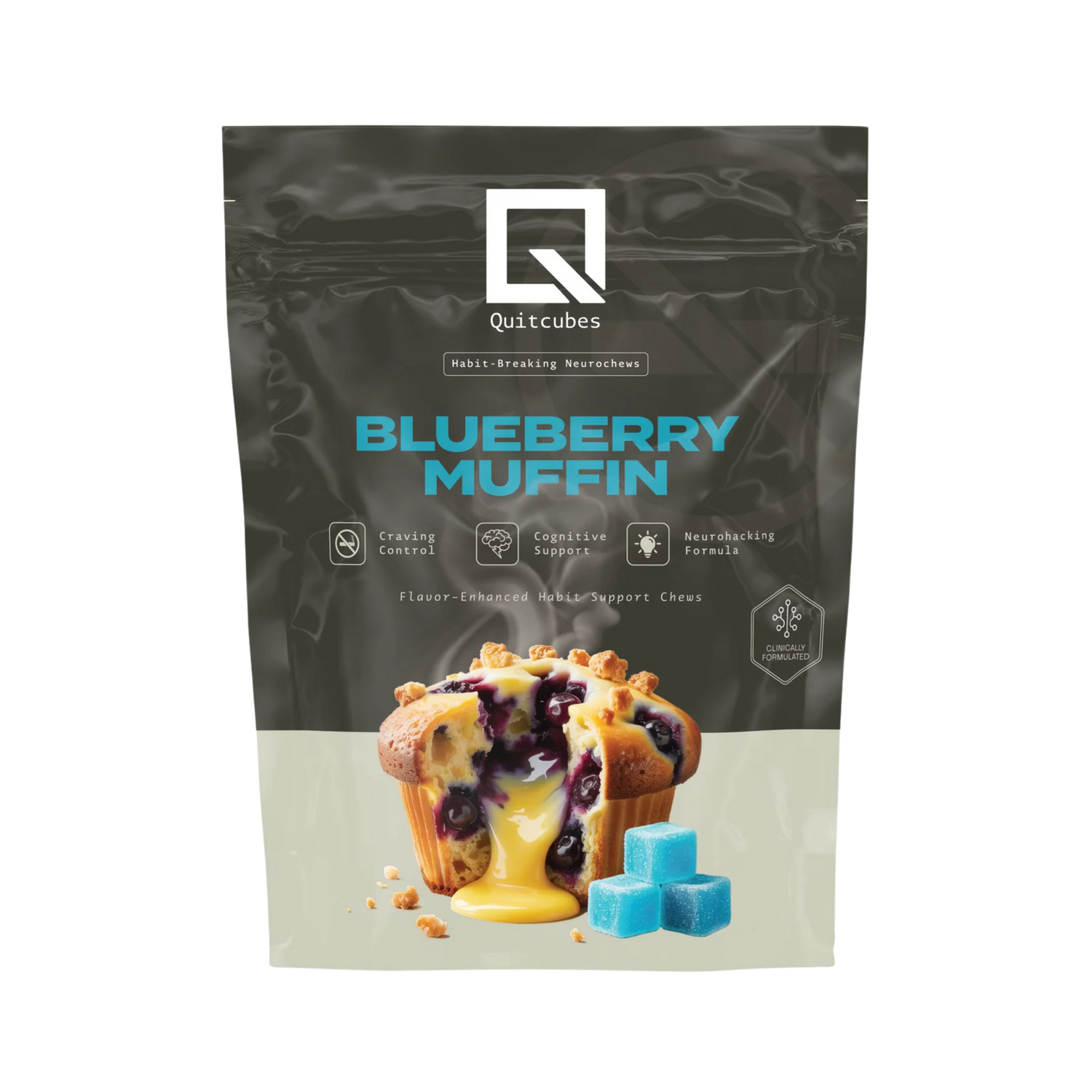
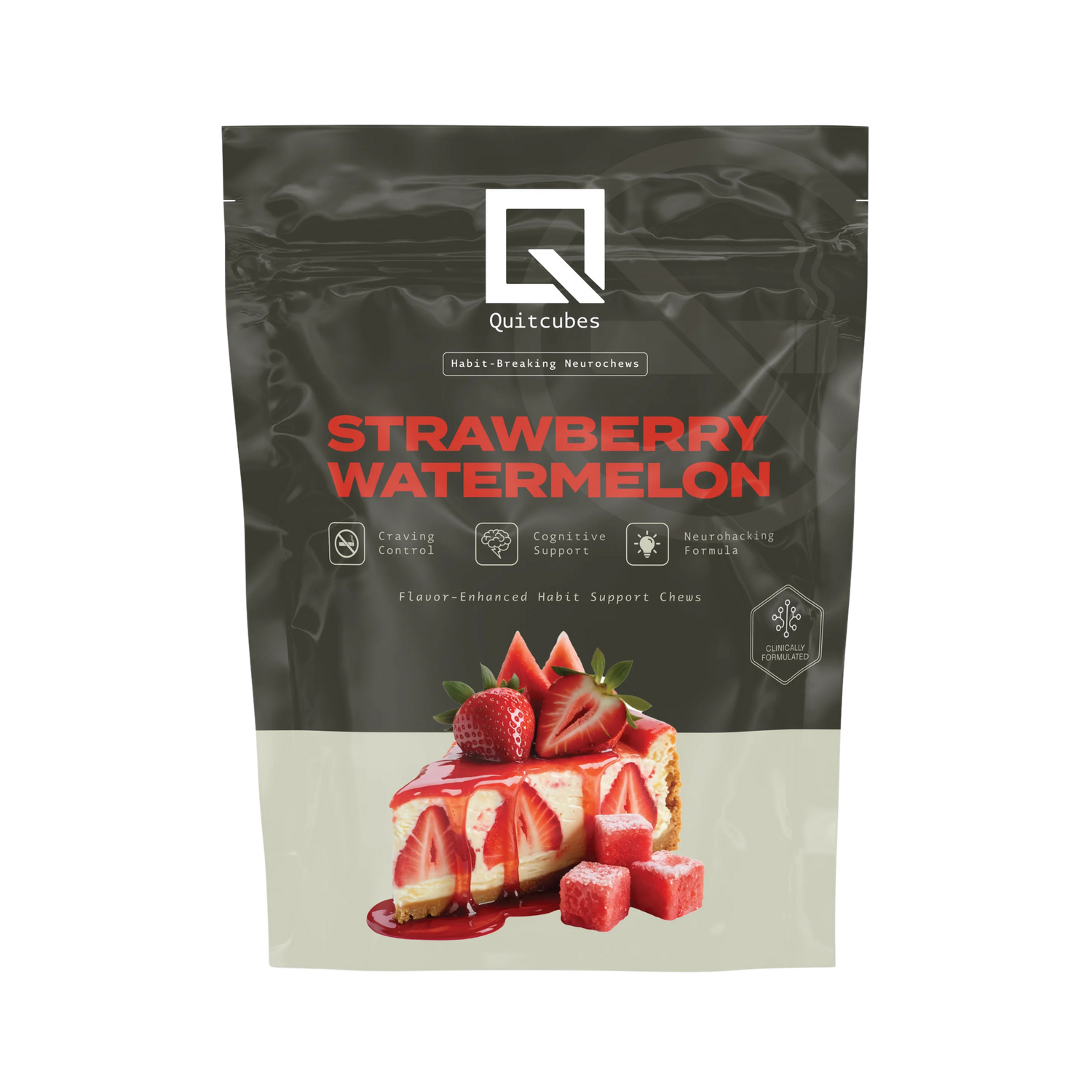
A powerful way to interrupt a stress response is through sensory grounding. The bold, natural flavors of Blueberry Muffin and Strawberry Watermelon provide a pleasant sensory distraction. By focusing on the intense, real-fruit taste, you can temporarily "short-circuit" a craving or a rising sense of panic, giving yourself the few minutes you need for the feeling to pass.
Natural Ways to Support Stress Management While Quitting
Quitcubes can provide an alternative to smoking and vaping; however, they work best as part of a comprehensive approach to stress relief. Below are four other natural ways to alleviate your anxiety:
- Box Breathing: This technique provides a physical cue for the nervous system to switch from a "fight or flight" response to a "rest and digest" state, which may reduce feelings of anxiety. When you feel anxious, use the 4-4-4-4 technique: inhale through your nose for 4 seconds, hold your breath for 4 seconds, exhale through your mouth for 4 seconds, and then hold your breath for another 4 seconds.
- Hydration: Dehydration can prolong symptoms of nicotine withdrawal. Getting hydrated with a glass of cold water when you have an urge to smoke or vape will provide some comfort to your throat and give you a boost of energy.
- Physical Movement: Even a five-minute walk can trigger a natural release of endorphins, which help counteract the irritability caused by low dopamine levels.
- Mindful Flavor Engagement: Use a Strawberry Watermelon cube mindfully. Focus on the texture and the shift in flavor. This acts as a form of "grounding," which is a common psychological technique used to manage anxiety.
Long-Term Mental Health: The Reward of Quitting
Most importantly, these first few months of withdrawal from smoking are only temporary. The more distance your body has from nicotine, the sooner your body will start to return to baseline stress levels lower than those associated with smoking/vaping.
Improved Emotional Regulation
Without the highs and lows associated with the fluctuations of nicotine, your brain can return to regulating its own moods in a more natural manner. Many people find that once they are through the transition period, they become calmer, more focused, and less likely to have outbursts of anger or anxiety.
Freedom from the "Urgency"
No more "Urgency." The greatest mental health benefit to quitting is no longer having the pressure of ruining your day because you have to schedule your day around smoking/vaping. This removal of "substance-seeking" behavior reduces the background noise of stress in your life, allowing you to be more present in your work and relationships.
Better Sleep Quality
Nicotine is a stimulant that can interfere with REM sleep. As you transition to a nicotine-free life using Quitcubes, you may find that your sleep quality improves. Better sleep is the foundation of effective stress management, providing you with the resilience needed to face each day.
A Clean-Label Commitment
We believe that a better alternative to vaping and smoking should be as transparent as possible. We’ve avoided the synthetic additives that can often cause their own energy crashes or irritability.
- No Artificial Sweeteners: All of our products are made with fruit flavors from nature, resulting in pure flavor.
- No Artificial Dyes: The colors in our Blueberry Muffin and Strawberry Watermelon varieties come from natural sources.
- Non-Nicotine Formula: Our mission is to help you break the cycle, not prolong it.
Start Your Journey Toward a Calmer Life
Although quitting an addiction is a challenge, you shouldn't feel as though you're doing it all by yourself. Using Quitcubes will provide you with a tangible, functional alternative to smoking that also tastes good.
Quitting means more than simply giving up a bad habit; it also means finding new ways of coping with life. By opting for a fruit-flavored cube instead of a cigarette, you'll prove to yourself that you have what it takes to handle your stress in a healthy manner.
Are you ready to rewire your routine and manage your stress naturally? Try Quitcubes today and discover a better alternative for your daily routine.
References & Scientific Sources
- National Library of Medicine (PubMed ID 7722172): A study on the immunological and pharmacological effects of nicotine, exploring how it acts as a stimulant and modulator of the stress response. View Source
- American Psychological Association (APA): Research on the "stress paradox" of nicotine and how withdrawal symptoms mimic chronic anxiety.
- Mayo Clinic: Guidance on using behavioral substitution and oral fixation management to try to help manage the psychological stress of quitting.
- Journal of Behavioral Medicine: Studies on the role of functional ingredients and sensory distraction in reducing irritability during habit cessation.
- Smokefree.gov: Insights into the relationship between nicotine, cortisol levels, and long-term mental health recovery.
Try Quitcubes Today
Quitcubes offer a better alternative to smoking and vaping. Break free from nicotine with a plant-powered alternative designed to try to help make the transition away from smoking or vaping easier.